

Founder coaching
Top Coaches for Founders & Entrepreneurs (2026): 6 Worth Knowing
A personal shortlist: who each one is for, what makes them different, and where each fit breaks down.
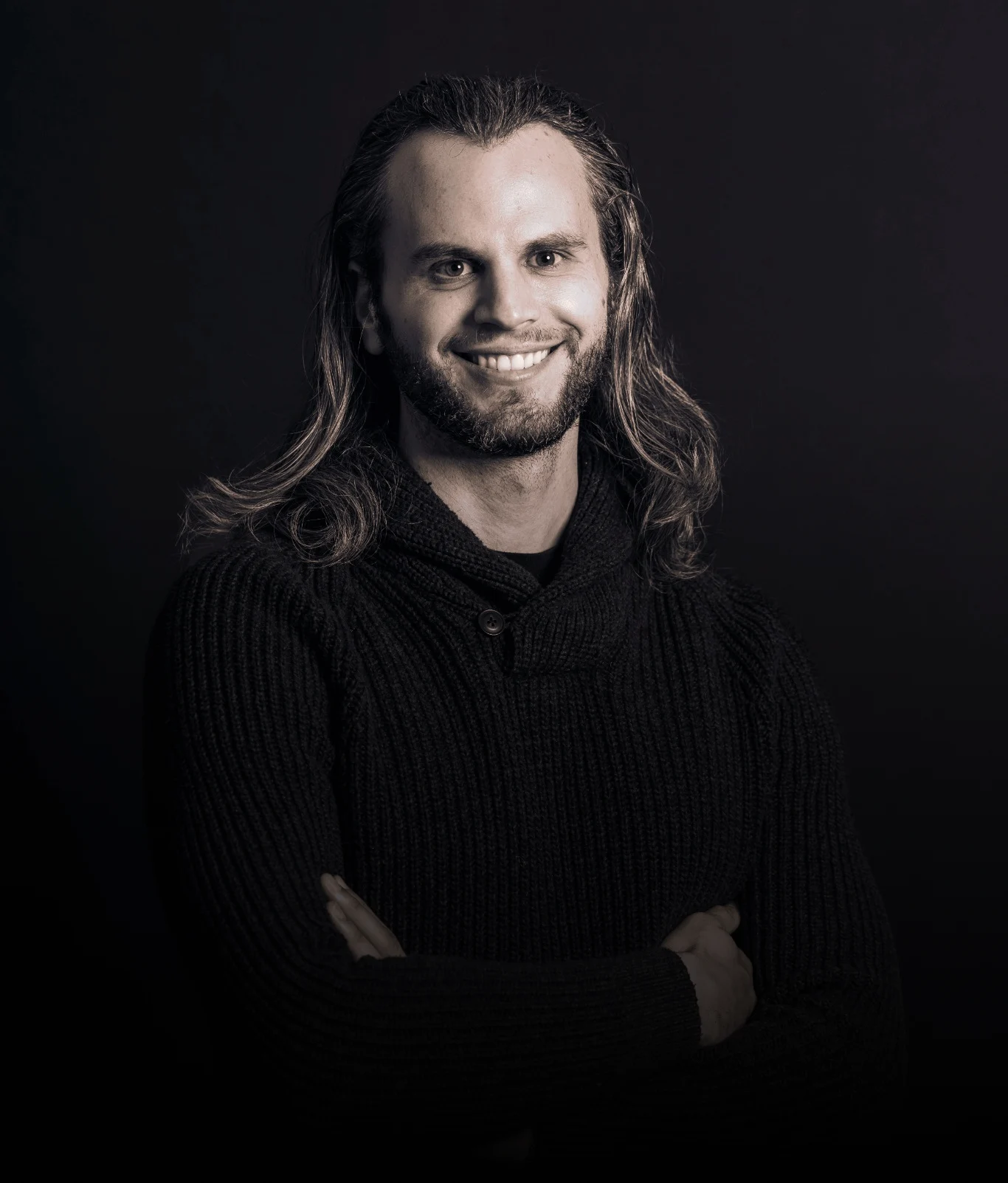 By Alex Boyd
It's extremely difficult to hire a coach, as an entrepreneur. Will they understand you? Do they have a track record outside of "just coaching", and if so, in what area? Will you get along? Are they within budget?
My goal in this article is not to be exhaustive or to list every single possible coach there is. These are a handful that I have had experience with (some as my own coach, some who have coached others I know or that I have learned about directly from them). Instead, I'd like to introduce you to several coaches that you might consider working with, and a bit about their unique approaches.
Find Your Best-Fit Coach
Describe what you're working through and this matcher will suggest the top 2–3 coaches from this list who fit your situation. Add your email and we'll reach out with more detail.
Your best-fit options
Got it — we'll be in touch.
Quick Comparison: Top Founder Coaches
| Coach | Focus Area | Format |
|---|---|---|
| Ian Mai | ADHD & performance for high-functioning founders and executives | 1-on-1, group programs, keynote speaking |
| Chelsea Linge | Feminine leadership for high-achieving women executives and founders | 1-on-1, group cohorts, retreats, peer mastermind, online community |
| Wildfront+ mastermind | SaaS founder growth, profitability, and exit planning | Small-group mastermind (5–8 people), project-based 1-on-1, self-paced academy |
| Sage Bova | Embodied inner work and ceremonial coaching for high-achieving men | Contact directly |
| Alisa Cohn | Startup-to-CEO transition; self-management and team leadership | 1-on-1 coaching |
| Jerry Colonna | Radical self-inquiry; the psychology of leadership | 1-on-1, group bootcamps and intensives |
1) Ian Mai — ADHD Performance Coach for High Performers
Best for: High-performing founders and executives who struggle with focus, overwhelm, and consistency, particularly those with ADHD (diagnosed or suspected), though Ian's methods are ADHD-informed rather than ADHD-exclusive and the results apply broadly.
Ian's backstory is worth understanding because it's what makes him credible. On paper, his life looked successful: high school valedictorian, President's Club sales rep closing multi-million-dollar deals, professional natural bodybuilder, husband, father. Internally, he was quietly losing a battle: binge eating, impulsive spending, and addiction patterns that spiraled into internet addiction and nearly cost him everything. An ADHD diagnosis cracked it open. He cleared $60k of bad debt, lost 60 lbs of fat sustainably, and rebuilt his operating system from the ground up. He's since worked with over 200 ADHD professionals through their own versions of the same journey.
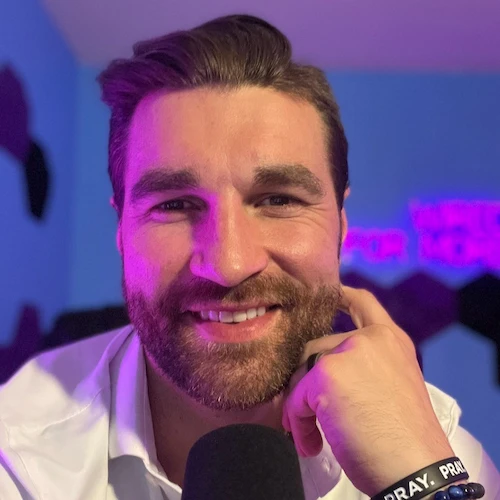
What makes Ian's work distinctive is that it's not just a focus toolkit. It's a whole-person operating system built around six pillars: diet, exercise, sleep, work focus, relationships, and spiritual grounding. These span nutrition and strength, executive function and mental performance, recovery, presence with the people who matter, and the internal foundation that makes the external performance possible. The premise (and the experience) is that you can't optimize one pillar in isolation. Everything is connected.
I went through Ian's 1-on-1 program myself. My ADHD is on the milder end of the spectrum, and I went in with some skepticism about how much room there was for improvement. I came out with a genuinely different relationship to my energy. The most consistent thing I notice now, months later, is that my energy is more stable and more available. The crashes I didn't even know I was experiencing are gone. It's the kind of change that's hard to articulate until you notice the absence of what used to be there. Nutrition, dopamine regulation and stabilization, and strength training have been key in translating to increased mental performance for me. Tangibly, this means I crash from 2–4pm less than 5% of the time, vs 40% of the time previously.
Ian offers 1-on-1 coaching (the format I went through), group programs, and keynote speaking engagements. He's based in Austin, TX.
Why he stands out
- Blends cognitive, physical, nutritional, and behavioral dimensions into one coherent program, not separate silos
- Personal experience with ADHD and recovery gives him a credibility most coaches can't manufacture
- Works with the full range: from mild ADHD in high performers to more severe executive dysfunction
- Offers group programs for those who want peer accountability alongside the coaching
2) Chelsea Linge — Feminine Leadership for High-Achieving Women
Best for: High-achieving women founders, executives, and business owners who are succeeding by external measures and running on empty internally, often because they've spent years leading in a style borrowed from a culture that wasn't built for them.
Chelsea's core insight is that most high-achieving women have learned to perform success in a primarily masculine mode: suppress uncertainty, project strength, outwork the room. It works, up to a point. And then it doesn't, and the cost shows up in burnout, disconnection from the body, a leadership style that feels like a performance rather than an expression.
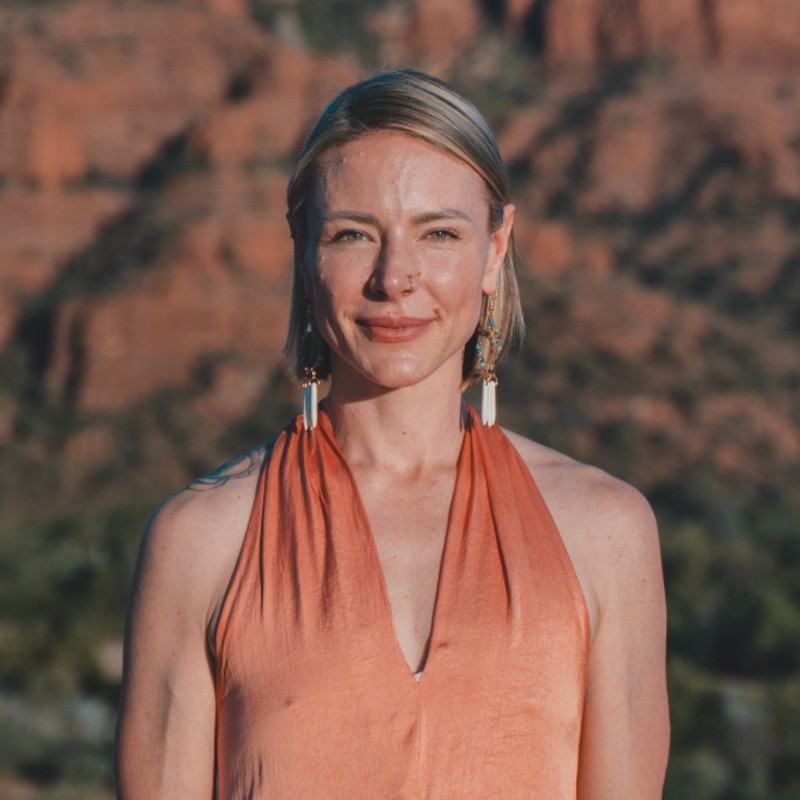
Her work as a business coach for women entrepreneurs isn't about softening. It's about bringing forward a more powerful version of leadership that works with women's biochemistry, physical experience, gifts, and psychology, not against them. Her coaching programs blend inner work, confidence building, executive presence, mental clarity, physical fitness, and spiritual alignment as one integrated practice, not as separate self-care boxes to check.
Chelsea offers 1-on-1 coaching but places particular emphasis on group formats: structured cohorts and programs, retreats, and peer mastermind groups specifically designed for coaches, consultants, and agency owners. She also runs a vibrant online community for women in this work.
Why she stands out
- Explicitly designed for women who are already high-performing, not starting-from-scratch coaching
- Integrates the physical dimension of leadership in a way most executive coaches don't touch
- Strong group program infrastructure for those who want peer accountability alongside the 1-on-1 work
- The mastermind format makes her a natural fit for founders who also want to be in the room with other high-caliber women
3) Wildfront — Mastermind for SaaS Founders
Best for: Bootstrapped or lightly-funded SaaS founders who want a paid mastermind with real peer accountability, honest peer feedback, and expert guidance specifically on SaaS growth, profitability, and exit planning.

Most general-purpose founder coaching programs don't go deep enough on the things that actually matter to a SaaS founder: churn mechanics, MRR expansion, engineering tradeoff decisions, acquisition readiness, unit economics. We built the Wildfront+ mastermind to fill that gap.
The format is deliberately small: 5–8 founders per group, 90-minute monthly calls. The goal is density of insight per hour, not volume of content. Each call is structured to surface real problems from real founders and work through them in front of the group, which is where most of the learning happens.
1-on-1 coaching with Wildfront is available, but only in short project-based engagements, not ongoing retainers. If you want the ongoing accountability, the mastermind is the right format. Founders are also encouraged to work through the Wildfront Academy on a self-paced basis between calls.
Why it stands out
- Specifically designed for SaaS founders: the problems we focus on are SaaS problems, not generic entrepreneurship
- Small group size (5–8) means everyone gets real airtime every call
- The Academy gives founders a structured knowledge base to build from between sessions
- Project-based 1-on-1 engagements available for focused work on a specific challenge
Interested in the Wildfront+ mastermind?
Small groups, SaaS-specific, 90 minutes a month. Apply to join or learn more about how it works.
4) Sage Bova — Ceremonial Coach & Men's Guide
Best for: The man who has built a life that looks full from the outside and feels hollow from the inside. The one who gives everything and can't figure out why it doesn't come back.
Twenty years of discipline and initiation. More than three hundred ceremonial experiences. A boxing coach. He has worked with executives, entrepreneurs, fathers, and teenagers. He knows the difference between a man who is living for approval and a man who is ready to live from himself.
The man Sage works with is not broken. He is unequipped. He grew up without anyone showing him how to feel, how to ask, how to let someone in without losing himself in the process. He cares deeply about his family and community, but has been improvising, which works until it doesn't. He holds it together, throws the parties, picks up the tabs. His phone goes quiet when things get hard.
He can only take relationships so far or so deep before a conflict costs him the whole thing.
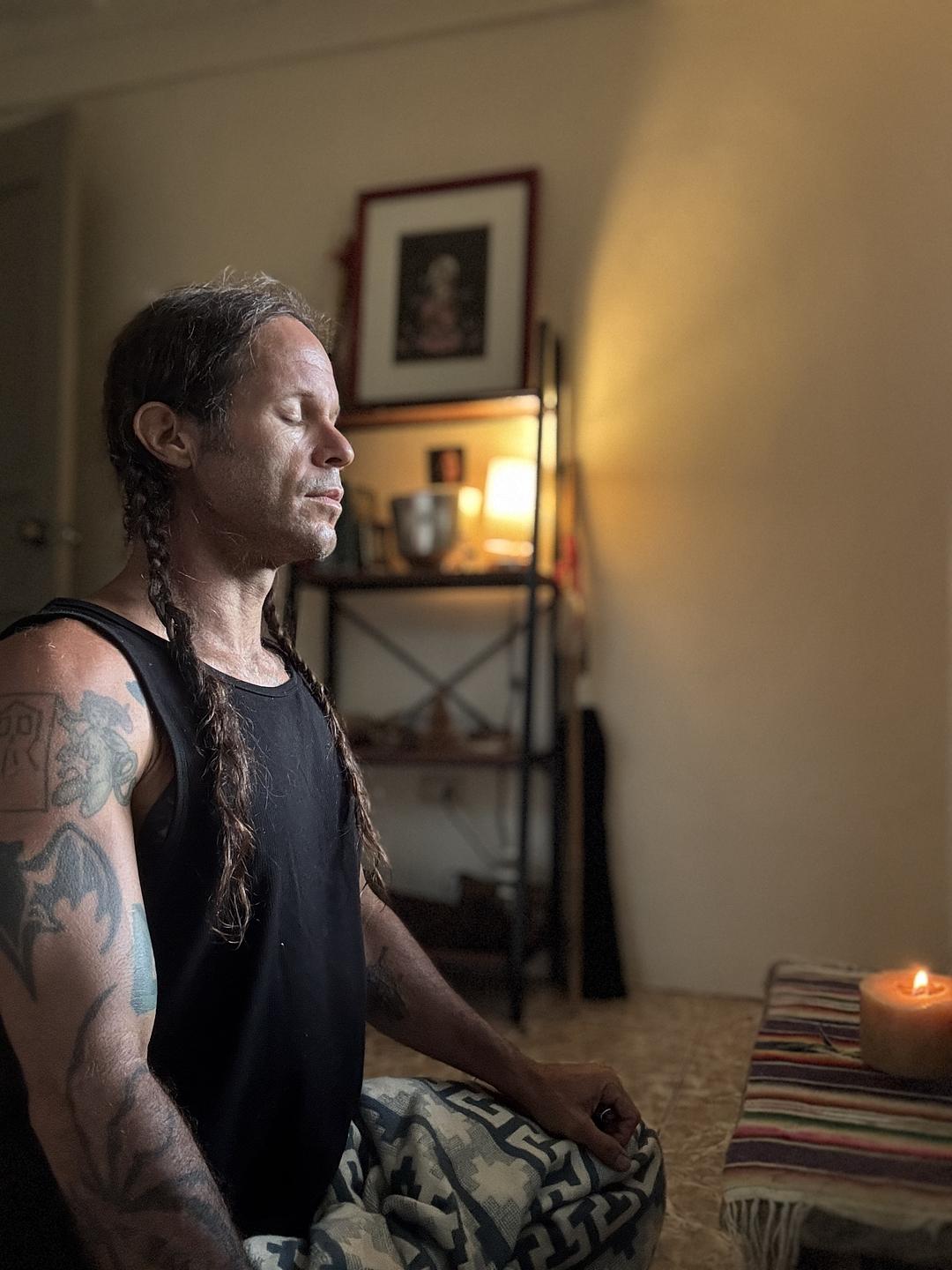
What Sage offers is not a course or a weekend. It is a real container, with a real curriculum built over a lifetime of doing the actual work, in a body, in community, in ceremony, in the dirt. It meets a man where the performance of life stops and the real living begins.
You never have to be alone again.
He walks this path himself. If you are ready to walk yours, he is ready to join you.
Why he stands out
- He lives what he teaches. He teaches to deepen his own understanding of love.
- The man Sage works with has gotten very good at looking like he has it together. Underneath, he is terrified of losing it all.
- Sage works by referral only. If you believe this is your next door, reach out and ask for an introduction. We will take it from there.
5) Alisa Cohn — From Start-Up to Grown-Up
Best for: Founders navigating the specific transition from hands-on, everything-in-my-head operator to a CEO who can actually lead a scaling team (the "startup to grown-up" arc).
Alisa Cohn has been named the #1 Startup Coach globally by Global Gurus for four consecutive years and is listed among the Top 50 Coaches in the World by Thinkers50. She's coached the founders of Etsy, Venmo, DraftKings, Foursquare, and The Wirecutter, as well as leaders at Google, Dell, IBM, Microsoft, and Pfizer. She's the kind of coach who has actually seen the full journey, from seed-stage to public company, across enough companies to recognize patterns that most coaches haven't encountered.

Her methodology is practical and inside-out: the first person you lead every day is yourself. She starts with self-management: identifying your triggers, defusing self-doubt, and understanding your motivators. She then translates that into team leadership, feedback culture, communication, and how you actually run meetings. Her book From Start-Up to Grown-Up won the 2022 Independent Press Award and is one of the cleaner distillations of what it actually takes to grow as a founder-CEO.
Her coaching format is primarily 1-on-1. She also hosts a podcast of the same name.
Why she stands out
- Track record with actual recognizable companies, not just testimonials
- Methodologically clear: the inside-out approach is well-documented and not just marketing language
- Strong fit for technically-strong founders who feel like the people and culture side is the actual constraint
- The book is worth reading before or alongside the coaching; it makes the methodology legible
6) Jerry Colonna — Radical Self-Inquiry
Best for: Founders who sense that their company's problems are a mirror of something unresolved in themselves, and are ready to ask harder questions than a typical business coach will ask.
Jerry Colonna is known as the CEO Whisperer, though that framing undersells him. He co-founded Flatiron Partners in the 1990s, one of the most successful early-stage VC firms of its era. He left after a breakdown that forced him to confront what he was actually building and why. He's been coaching founders for over 27 years since. He is not a business strategist, and working with him expecting business strategy will miss the point entirely.

His methodology centers on radical self-inquiry: asking honest, often uncomfortable questions about how your history, your relationships, your patterns, and your fears are showing up in how you lead. His core question — "How have I been complicit in creating the conditions I say I don't want?" — is one of those questions that sounds simple and takes years to actually answer. He blends Buddhist practice, Jungian psychology, and firsthand entrepreneurial experience in a way that's genuinely unusual. He's the author of Reboot: Leadership and the Art of Growing Up.
Reboot offers 1-on-1 coaching and group bootcamps and intensives. Jerry himself has limited availability; the firm has a team of coaches trained in the methodology.
Why he stands out
- One of the few coaches with both serious VC-operator credibility and genuine depth in the inner work
- The methodology is clearly articulated and published; you can evaluate it before committing
- Strong fit for founders who've tried conventional business coaching and found it too shallow
- Group bootcamp format is accessible if 1-on-1 with Jerry directly isn't available
How to choose the right founder coach
The most common mistake founders make when looking for a coach is leading with the coach's fame or price point rather than matching the type of coaching to the actual problem. Here's a rough guide:
- If your energy is inconsistent, you lose hours to distraction, or ADHD is a real factor: Ian Mai.
- If you're a high-achieving woman who's exhausted from leading in a masculine mode: Chelsea Linge.
- If you're a SaaS founder who wants structured peer accountability and strategic depth: Wildfront+ mastermind.
- If you're a high-achieving man who gives everything to others and can't figure out why nothing fills the hole: Sage Bova.
- If you're navigating the transition from founder to scalable CEO (especially the people and communication side): Alisa Cohn.
- If you sense your company's problems are personal problems in disguise, and you're ready to go deep: Jerry Colonna.
These aren't mutually exclusive. Some founders work with more than one type of coach simultaneously: a tactical operator coach for the business and someone like Jerry or Sage for the inner dimension. The important thing is knowing which problem you're actually trying to solve before you start writing checks.
FAQ: Founder coaching
What does a founder coach actually do?
It depends entirely on the coach and the focus. A tactical business coach helps you make better decisions about your company: strategy, hiring, org design, prioritization. An executive or leadership coach helps you become a better leader: communication, culture, self-awareness. A somatic or inner-work coach helps you understand the deeper patterns that drive your behavior as a founder. Many coaches blend these, but it's worth being honest with yourself about which type you need before you start.
How much does founder coaching cost in 2026?
Expect to pay anywhere from $500 to $2,000 per month for group or community-based programs. 1-on-1 coaching from an established coach typically runs $2,000 to $10,000+ per month, depending on their track record, scope, and demand. The Mochary Method and similar high-profile operators are effectively unavailable at any price for new clients. Group mastermind programs like Wildfront tend to offer the best value-per-dollar for early to mid-stage founders who don't yet need a dedicated 1-on-1 coach.
What's the difference between a business coach and an executive coach?
The terms are often used interchangeably but generally point to different things. A business coach typically focuses on the company: growth levers, strategy, operations, revenue. An executive coach focuses on you as a leader: how you communicate, make decisions, handle conflict, and develop your team. The best founder coaches often do both, but knowing which you need helps you ask better questions during the evaluation process.
How do I know if I need coaching or therapy?
If you're dealing with acute mental health issues, trauma that's actively destabilizing you, or clinical depression or anxiety, see a licensed therapist first. Coaching assumes a functional baseline and focuses on growth, not healing. That said, some coaches — like Jerry Colonna, Chelsea Linge, and Sage Bova — work in territory that overlaps with the inner work traditionally done in therapy. It's not either/or. Many founders work with both simultaneously.
Is group mastermind coaching worth it for founders?
For the right founder, yes. Often more valuable than 1-on-1 coaching, not less. The peer dimension matters: hearing how another founder solved a problem you're facing, being asked hard questions by someone who runs a similar business, having accountability that costs you socially if you drop it. The caveat is group quality. A mastermind is only as good as the people in the room. Verify the curation process and the caliber of existing members before committing.
Final thought
The founder coaching market has grown enormously over the past decade, which means there are more genuinely excellent options and more noise than ever before. The coaches on this list represent different philosophies, different formats, and different target founders. None of them are the right answer for everyone.
The most useful frame I've found: start with the problem, not the coach. Be honest about what's actually holding you back: your energy, your leadership gaps, your inner patterns, your SaaS growth ceiling. and then find the coach whose work is specifically designed for that problem. That's a much more reliable path than chasing the coach with the biggest audience or the most recognizable clients.
If you're a SaaS founder and the Wildfront+ mastermind sounds like a fit, apply directly or learn more about how it works. If one of the other coaches on this list sounds right for you, reach out to them directly. They're all worth the conversation.
Join a room of bootstrapped SaaS founders
Wildfront+ is an invite-only mastermind of vetted SaaS and app founders. With professionally facilitated calls, honest feedback, real connection, and peer support. Not ready to apply? Start free with the bootstrapper academy.